Wayve and Uber Set to Launch Driverless Robotaxis in London by 2026
Wayve and Uber will launch driverless robotaxis in London by 2026, backed by UK AV policy, new AI tech, and global R&D expansion in Japan.
 AnniWeston
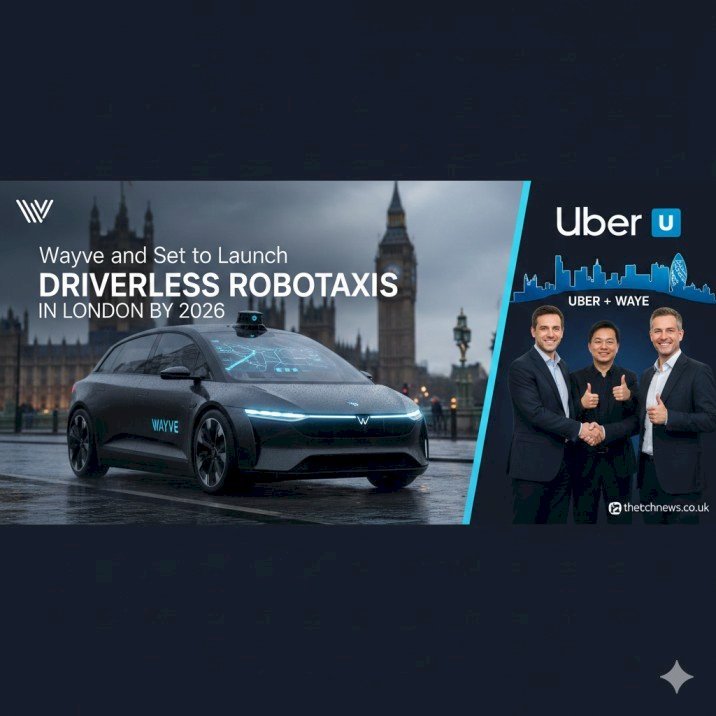
UK-based autonomous driving startup Wayve and ride-hailing giant Uber are set to launch one of London’s first fully driverless robotaxi services, with a pilot expected to begin in spring 2026. Supported by the UK government's accelerated framework for commercial self-driving vehicle trials, this initiative marks a major milestone in the UK’s push to embrace autonomous vehicles (AV) as part of its future urban transport landscape.
Wayve’s innovative AI-driven technology enables flexible and scalable autonomous driving without relying heavily on detailed high-definition maps. This “embodied AI” approach allows Wayve’s vehicles to adapt to complex urban environments like London’s unpredictable streets, providing a competitive edge in the race to commercialise robotaxis.
Uber, which made a strategic investment in Wayve during its 2024 Series C funding round, aims to realise its vision of integrating fully autonomous vehicles into its ride-hailing network through this partnership. The forthcoming London pilot will initially deploy vehicles with safety drivers onboard, transitioning to full autonomy once regulatory approvals are granted.
Wayve CEO and co-founder Alex Kendall noted the significance of London’s diverse traffic patterns and road conditions as an ideal proving ground for their technology, stating, “If you prove this technology works here, you can literally drive anywhere.” The pilot forms a critical step in Wayve’s broader ambition to deploy its AI-powered systems globally.
Complementing its UK operations, Wayve recently opened a new research and development centre in Yokohama, Japan. This facility focuses on advancing urban autonomous driving and collaborating closely with Japanese automotive companies. Leveraging testing data from more than 90 cities worldwide, including Tokyo and London, the centre aims to strengthen Wayve’s AI capabilities for diverse driving environments.
The UK government has played an instrumental role by enacting the Automated Vehicles Act (2024), which provides a supportive legal and regulatory framework for AV testing and commercial robotaxi services. By moving up the timeline for commercial trials to 2026, the government aims to accelerate adoption and stimulate innovation in the sector.
Nvidia CEO Jensen Huang also emphasised robotics and autonomous vehicles as strategic priorities for the upcoming decade, highlighting Nvidia’s critical role in providing AI computing infrastructure. Their investment in Wayve and shared vision around “physical AI” underpin advances in self-driving systems aimed at reshaping urban mobility.
Together, Wayve and Uber are positioned to transform urban transportation by bringing safe and scalable driverless robotaxis to London’s streets. Their partnership illustrates the growing convergence of AI innovation, supportive policy, and commercial deployment that defines the next era of autonomous mobility.
About thetechnews.co.uk
thetechnews.co.uk is a leading UK digital news platform delivering authoritative coverage of technology, innovation, and digital transformation. We specialise in insightful reporting on AI, autonomous systems, cybersecurity, and government tech policies, with a focus on developments impacting the UK and global tech sectors. Committed to high-quality, human-written journalism, thetechnews.co.uk offers in-depth analysis and expert perspectives to inform professionals, enthusiasts, and policymakers shaping the future of technology.
Frequently Asked Question (FAQs)
1. When will Wayve and Uber launch driverless robotaxis in London?
Wayve and Uber plan to launch driverless robotaxis in London in spring 2026, starting with supervised pilot testing before moving to full autonomy.
2. Are the robotaxis fully driverless from the beginning?
No, the pilot will begin with safety drivers inside the vehicles. Full driverless operations will start only after the UK regulators approve the technology.
3. What technology does Wayve use for its self-driving cars?
Wayve uses embodied AI, an end-to-end autonomous driving system that learns from data instead of depending on detailed HD maps. This helps the vehicle adapt to complex city roads.
4. Why is London chosen for the robotaxi pilot?
London’s complex roads, traffic patterns, and unpredictable conditions make it an ideal testing ground. Wayve says that proving the technology in London means it can work in many global cities.
5. What role does Uber play in this project?
Uber invested in Wayve and will integrate the robotaxis into its ride-hailing platform, helping launch one of London’s first commercial autonomous taxi services.
6. What is the UK Automated Vehicles Act (2024)?
The Automated Vehicles Act is a new UK law that sets the rules for testing and commercial use of self-driving vehicles. It allows commercial AV trials from 2026.
7. Why did Wayve open an R&D centre in Japan?
Wayve opened an R&D centre in Yokohama to work on advanced urban driving, collaborate with Japanese car makers, and gather data from diverse cities like Tokyo and Osaka.
8. How is Nvidia involved in Wayve’s autonomous driving technology?
Nvidia provides the AI computing hardware and supports research on “physical AI.” Nvidia also invested in Wayve during its $1B+ Series C funding round.
9. Will these robotaxis replace human Uber drivers?
Not immediately. Autonomous vehicles will run alongside human drivers, and the transition will be gradual. Human drivers will still be needed for many years.
10. How safe is Wayve’s autonomous driving system?
Safety drivers and continuous monitoring will be used during the pilot. Full deployment will only begin after the UK’s safety regulator confirms that the technology meets strict standards.