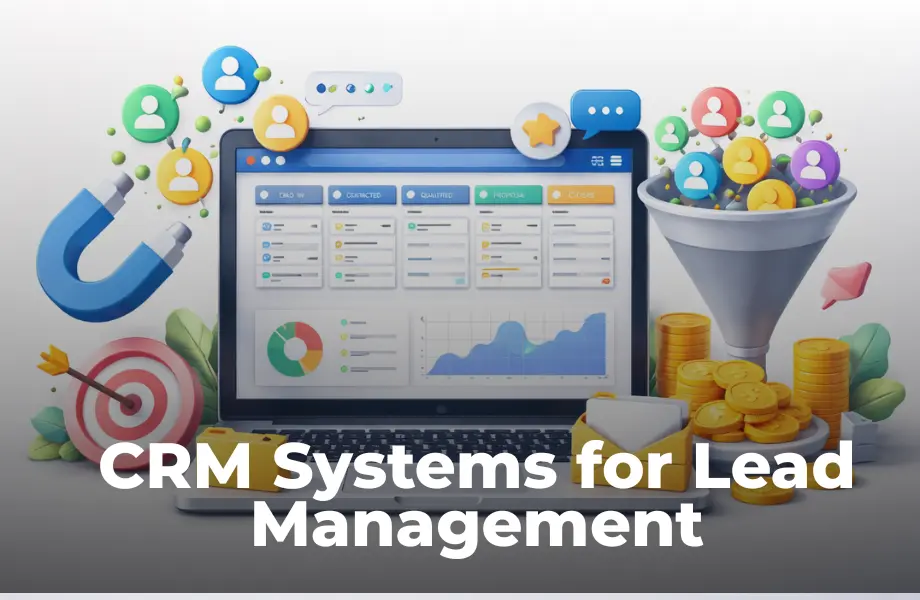
Managing leads properly is key to growing any business. Without a clear system, it is easy to lose potential customers and miss sales opportunities. This is why many businesses now use a lead management CRM.
A lead management CRM helps you collect, track, and convert leads in one place. It reduces manual work, improves follow-ups, and helps your sales team focus on the right prospects. In this guide, you will learn everything about lead management CRM, including features, tools, benefits, and how to choose the best one for your business.
What is Lead Management?
Lead management is the process of capturing potential customers, tracking their actions, and guiding them through the sales journey until they become paying clients. It includes collecting leads from different sources such as websites, ads, and emails, then organizing and nurturing them with proper communication. According to Salesforce, this process helps businesses identify which leads are most likely to convert and ensures no opportunity is missed. A strong lead management process improves sales efficiency, customer experience, and overall business growth.
Why Lead Management is Important
Lead management is important because it helps businesses stay organised and focused on high-quality prospects. Without it, leads can be lost or ignored. A proper system ensures timely follow-ups, better communication, and higher chances of conversion. It also helps teams understand customer needs and improve sales strategies over time.
What is a Lead Management CRM?
A lead management CRM is a software tool that helps businesses manage their leads from the first interaction to final conversion. It stores all customer data in one place and tracks every interaction such as emails, calls, and meetings. As explained by HubSpot, these systems can automatically capture leads from forms and websites, saving time and reducing errors. With features like automation and reporting, businesses can improve efficiency and make better decisions. A CRM also helps align marketing and sales teams for better results.
How Lead Management CRM Works
A lead management CRM works by collecting data from different channels and organising it into a central system. It tracks customer behaviour, assigns leads to sales teams, and automates follow-ups. The system also scores leads based on their activity, helping teams focus on the most valuable prospects.
Key Features of Lead Management CRM
Lead management CRM tools come with several powerful features that help businesses handle leads efficiently. These include automated lead capture, lead scoring, contact tracking, and pipeline management. Many systems also provide reporting tools that show how leads move through the sales funnel. According to Zendesk, tracking customer interactions in one place improves response time and customer satisfaction. Integration with marketing tools and mobile access also make CRM systems more useful for modern businesses.
Automation and Lead Scoring
Automation reduces manual work by handling tasks like sending emails and assigning leads. Lead scoring ranks prospects based on their behaviour and interest level. This helps sales teams focus on leads that are more likely to convert, saving time and improving efficiency.
Benefits of Using Lead Management Software
Using lead management software offers many benefits for businesses. It helps organise data, improve communication, and increase conversion rates. Sales teams can track every interaction and follow up at the right time. Automation saves time and reduces errors, while reporting tools provide insights into performance. Businesses can also personalise communication based on customer behaviour. Overall, it helps improve customer experience and supports long-term growth by making the sales process more efficient and structured.
Better Sales and Marketing Alignment
A CRM ensures that sales and marketing teams work together smoothly. Both teams can access the same data and understand customer behaviour. This improves collaboration, reduces confusion, and helps create better strategies to convert leads into customers.
Types of Lead Management CRM Tools
There are different types of lead management CRM tools available based on business needs. Some are free and suitable for beginners, while others offer advanced features for large companies. Some tools focus on sales pipelines, while others focus on automation and integrations. According to Zapier, the right choice depends on your workflow, team size, and required features. Businesses should compare options carefully before choosing a CRM system.
Free vs Paid CRM Tools
Free CRM tools are good for small businesses and startups, but they often have limited features. Paid tools offer advanced automation, analytics, and integrations. Businesses should start with free options and upgrade as their needs grow.
Best Lead Management Software for Businesses
There are many CRM tools available in the market, each offering unique features. Some are designed for beginners, while others are built for advanced users. Popular options include HubSpot, Salesforce, Pipedrive, and Zendesk Sell. These tools help manage leads, track deals, and improve conversions. If you want more options, you can explore this guide on best CRM software for sales teams in the UK to find the right fit for your business.
CRM for Small Businesses
Small businesses need simple and affordable CRM tools. These tools should be easy to use and quick to set up. If you are starting out, check this guide on CRM software for startups to find beginner-friendly options.
Best Free Lead Management CRM
Free CRM tools are a great starting point for businesses with limited budgets. They offer basic features like contact management, email tracking, and simple automation. While they may have limitations, they still provide value for small teams. Businesses looking for budget-friendly options can also explore cheap CRM software for small businesses for more affordable solutions.
Open Source CRM Options
Open source CRM tools allow businesses to customise features based on their needs. They are flexible and cost-effective but may require technical knowledge. Learn more about them in this guide on open source CRM software.
Lead Management Apps for Mobile Users
Mobile CRM apps allow businesses to manage leads on the go. Sales teams can access customer data, update deals, and communicate with leads from anywhere. This improves productivity and ensures no opportunity is missed. Mobile access is especially useful for field sales teams who need real-time information while meeting clients.
Benefits of Mobile CRM Apps
Mobile CRM apps improve flexibility and speed. Sales teams can respond quickly to leads and update information instantly. This helps maintain accurate records and improves customer experience by ensuring faster communication.
Lead Management CRM Certification
CRM certification helps professionals learn how to use CRM tools effectively. These courses cover lead tracking, automation, and sales strategies. Certification can improve career opportunities and help businesses get better results from their CRM systems. It is especially useful for sales professionals and marketers who want to improve their skills.
Who Should Get Certified?
CRM certification is ideal for sales teams, marketers, and business owners. It helps them understand how to manage leads better and use CRM tools efficiently. This leads to improved performance and better business outcomes.
How to Choose the Right Lead Management CRM
Choosing the right CRM depends on your business size, budget, and needs. You should look for features like automation, ease of use, integration, and scalability. A good CRM should grow with your business and support your long-term goals. For a complete overview, you can read this guide on CRM software to make an informed decision.
Key Factors to Consider
Important factors include pricing, features, ease of use, and support. You should also check if the CRM integrates with your existing tools. A well-chosen CRM can improve efficiency and help your business grow faster.
Conclusion
A lead management CRM is an essential tool for modern businesses. It helps organise leads, improve communication, and increase sales. Whether you choose a free or paid solution, the right CRM can transform your sales process. Start with a simple tool, learn how it works, and upgrade as your business grows.
Author Bio
Lokesh BM is part of The Tech News editorial team, focusing on technology, business tools, and digital trends. He writes simple and helpful content to guide readers in making better decisions. His work covers CRM software, startups, and online tools that improve productivity and business growth.
Disclaimer
This article is for informational purposes only. It does not provide financial, business, or technical advice. Readers should research and evaluate CRM tools based on their specific needs before making any decision. The Tech News is not responsible for any outcomes resulting from the use of this information.
FAQs (Frequently Asked Questions)
1. What is a lead management CRM?
A lead management CRM is a software tool that helps businesses collect, track, and convert leads. It stores customer data and manages interactions in one place to improve sales efficiency.
2. How does a CRM help in lead conversion?
A CRM helps by tracking customer behaviour, automating follow-ups, and scoring leads. This allows sales teams to focus on high-quality prospects and improve conversion rates.
3. Is free CRM software enough for small businesses?
Yes, free CRM tools are good for small businesses and startups. They offer basic features, but you may need to upgrade to paid plans as your business grows.
4. What features should a good lead management CRM have?
A good CRM should include lead capture, automation, lead scoring, pipeline tracking, reporting, and integrations with other tools.
5. Can CRM tools be used on mobile devices?
Yes, most modern CRM tools offer mobile apps. These allow sales teams to manage leads, update data, and communicate with clients from anywhere.
6. Who should use a lead management CRM?
Sales teams, marketers, business owners, and startups can all benefit from using a CRM to manage leads and improve sales performance.