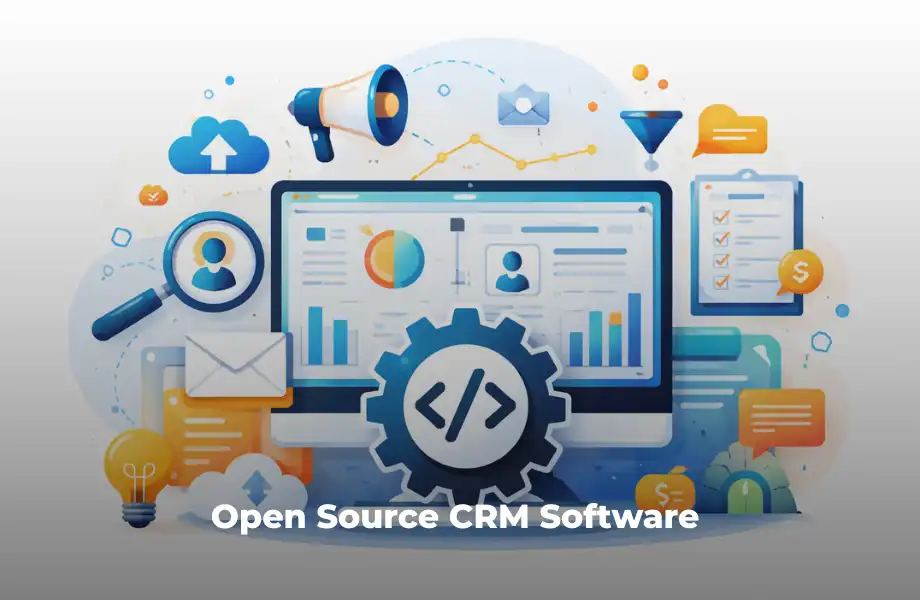
Customer relationship management tools help businesses track leads, manage contacts, and improve sales performance. Many companies today prefer open source CRM software because it gives them more flexibility and control. Instead of paying high subscription fees, businesses can use and customize these platforms according to their needs.
An open source CRM platform allows organizations to access and modify the source code. This makes it easier to build custom workflows, integrate with other systems, and host the software on private servers. Because of this flexibility, open source CRM tools are widely used by startups, developers, and small businesses.
In this guide, we explain what open source CRM is, how it works, its benefits, and the best platforms available today.
What Is Open Source CRM Software
Open source CRM software is a customer relationship management system where the source code is publicly available. Businesses and developers can access the code, modify it, and customize the system based on their specific needs. Unlike traditional CRM platforms that require monthly subscriptions, many open source CRM tools can be used for free.
These systems help companies manage customer data, track leads, automate sales processes, and improve communication with clients. If you want to understand the basic concept of CRM platforms, you can read our detailed guide about what is CRM software.
According to SoftwareTestingHelp, open source CRM platforms allow companies to modify the software code and build custom features that match their business workflows.
How Open Source CRM Platforms Work
Open source CRM platforms work similarly to other CRM systems but provide greater flexibility for customization and deployment. Businesses can install the CRM on their own servers or use cloud hosting services. Because the software is open source, developers can modify the system to create custom modules, automate processes, and integrate third-party tools.
These platforms store customer data such as contact details, sales history, and communication records. Sales teams can track leads, monitor deals in a pipeline, and generate reports. According to CRM.org, open source CRM also helps organizations avoid vendor lock-in while keeping full control over their data and infrastructure.
Main Features of Open Source CRM Software
Most open source CRM platforms provide the same essential tools as paid CRM systems. These features help businesses manage customers, track sales opportunities, and improve team productivity. Many systems also include automation tools that reduce manual tasks.
According to SourceForge, many open source CRM tools are supported by active developer communities that continuously improve the software with new modules and updates.
Contact and Customer Management
Contact management is one of the most important features in a CRM system. Businesses can store customer information, track communication history, and manage interactions from one central platform. This helps teams maintain organized records and deliver better customer service.
Lead and Sales Pipeline Tracking
Open source sales CRM systems allow businesses to track potential customers from the first contact to the final sale. Sales teams can monitor deal progress, prioritize opportunities, and manage the sales pipeline more effectively. This improves forecasting and helps teams close deals faster.
Marketing Campaign Management
Many open source CRM platforms include marketing tools that help businesses run email campaigns and manage lead generation activities. These tools allow marketing teams to track campaign performance and understand which strategies bring the most leads.
Reports and Analytics
Reporting tools help businesses understand customer behavior and sales performance. CRM analytics dashboards provide insights into revenue trends, conversion rates, and team productivity. This information helps companies make better strategic decisions.
Benefits of Using a Free CRM System Open Source
Businesses often choose open source CRM software because it provides powerful features without expensive licensing fees. These systems allow companies to customize their CRM environment and integrate it with other tools used in daily operations.
According to Capterra, many small and medium-sized businesses adopt open source CRM platforms to reduce costs while still gaining access to advanced customer management features.
Lower Software Costs
Most open source CRM platforms are free to download and use. Businesses only need to pay for hosting, customization, or support if needed. This makes them a cost-effective option for startups and growing companies.
Customization and Flexibility
Because the source code is available, developers can modify the system to match specific business requirements. Companies can create custom modules, integrate external tools, and design workflows that fit their operations.
Full Data Ownership
Self hosted CRM software allows businesses to store their customer data on private servers. This provides greater control over security, privacy, and compliance. Companies do not need to depend on third-party providers to manage their data.
Community Support and Development
Many open source CRM platforms have strong communities of developers and contributors. These communities regularly release updates, plugins, and improvements that enhance the functionality of the CRM system.
Popular Open Source CRM Software Platforms
There are many open source CRM tools available today. Each platform offers different features and customization capabilities. Businesses can choose the best option depending on their needs, technical resources, and growth plans.
SuiteCRM
SuiteCRM is one of the most widely used open source CRM platforms. It provides tools for sales management, marketing automation, and customer support. According to SuiteCRM, the platform helps businesses track leads, manage opportunities, and gain a complete view of customer interactions.
Odoo CRM
Odoo CRM is part of a larger open source business management suite that includes accounting, inventory, and project management tools. According to Odoo, the CRM allows businesses to capture leads from websites and manage sales activities through an easy-to-use pipeline interface.
EspoCRM
EspoCRM is a lightweight open source customer management platform designed for simplicity and flexibility. According to EspoCRM, businesses can manage contacts, automate workflows, and track sales performance while hosting the CRM on their own servers.
Vtiger Open Source CRM
Vtiger offers a CRM platform that combines sales, marketing, and customer support features in one system. According to Vtiger, businesses can automate workflows, track leads, and manage customer service tickets using the platform.
YetiForce CRM
YetiForce is a powerful open source CRM platform designed for flexibility and security. According to YetiForce, the system supports advanced business process automation and allows developers to customize nearly every part of the CRM environment.
Best Open Source CRM for Small Businesses
Small businesses often need affordable tools that can scale with their growth. Open source CRM software is a strong option because it allows companies to customize the platform without paying high subscription costs.
According to TechRadar, open source CRM tools are especially useful for startups and small businesses that want flexible software they can adapt to their workflows.
These systems can also integrate with marketing platforms and business tools. For example, companies working with a digital marketing agency for fintech often connect CRM platforms with marketing automation tools to track leads and improve customer engagement.
Businesses can also explore productivity tools in our guide about best business apps in the UK to improve operations alongside their CRM system.
Open Source CRM vs Proprietary CRM
Choosing between open source CRM and proprietary CRM software depends on business goals and technical resources. Proprietary CRM platforms often provide easier setup and dedicated support, but they usually require monthly or yearly subscription fees.
Open source CRM platforms offer more customization and full control over the software environment. Businesses can modify features, host the system privately, and integrate other tools easily.
However, companies may need technical expertise to manage and maintain an open source CRM platform effectively.
Final Thoughts
Open source CRM software provides a flexible and cost-effective way to manage customer relationships. These platforms allow businesses to customize their CRM environment, control their data, and build systems that match their unique workflows.
Popular tools like SuiteCRM, Odoo, EspoCRM, Vtiger, and YetiForce offer powerful features for managing sales, marketing, and customer support. With the right setup, these platforms can help businesses improve efficiency, strengthen customer relationships, and drive long-term growth.
For companies that want complete control over their customer management system, open source CRM tools are a practical and scalable solution.